WITH THE DANUBE is the title of the project I am currently involved in: a scenic assemblage for soprano, orchestra, two performers – with a river. The co-creative piece involves a number of collaborators, both human and more-than-human.
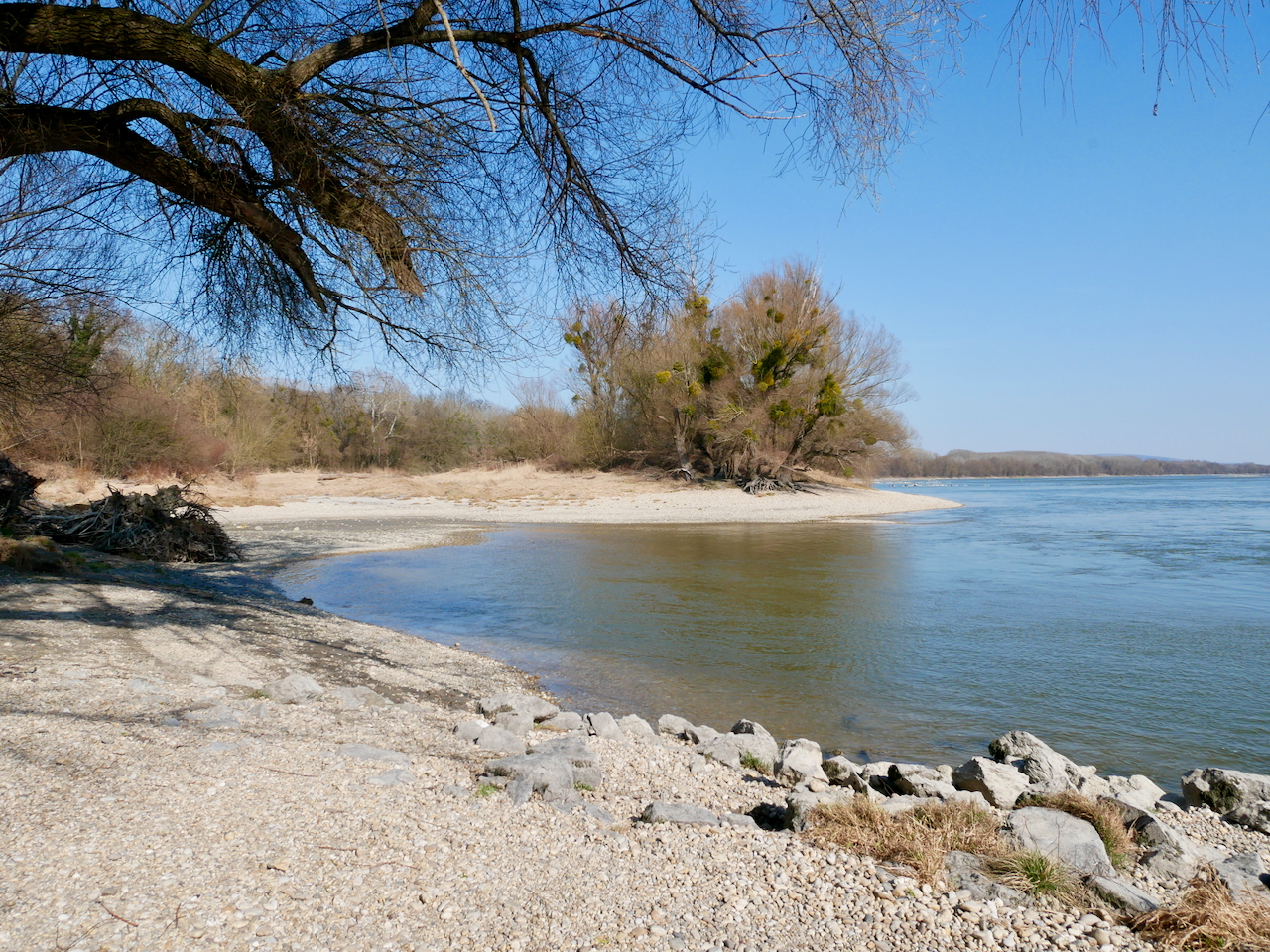
The River Danube near Orth (all fotos by Pia Palme)
The idea of a multispecies composition with the Danube River has matured in my mind for quite some time. In my understanding, a river is alive – a living landscape, a complex ecosystem. A multiplicity of life that interacts with me as I interact with it. Is it possible to co-create or co-compose music with a living fluvial landscape? How could the Danube River become an artistic collaborator on an equal level, rather than an inspiration or background for “my” work? In conversation with Bernhard Günther, the artistic director of the festival wienmodern, a plan emerged along with a realistic opportunity to perform such a work.
WITH THE DANUBE will be composed with the river. Not about the river, not inspired by the river, but with the river. The Danube River is not scenery, it is a living landscape, a complex ecosystem, a multiplicity of forces, beings, temporalities and presences. They ( I prefer to address the Danube as “they”) are an active, dynamic body of water, microorganisms, plants, animals, anorganic materials, currents, histories and sediments, and more-than-human infrastructures.
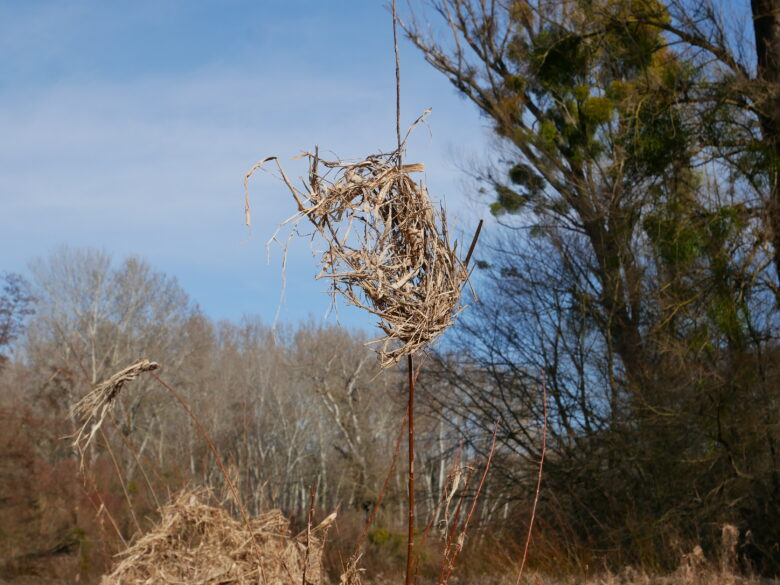
Delicate artwork created by the last flood
How can I compose with a river? Exploring this is a process of learning-by-doing. My artistic process develops in unknown directions. Yes, I do take responsibility for this part. The process is a very personal one. The composition is my first work with an orchestra and also my first work with a river as collaborator. I’m learning to listen into the Danube, underneath the surface of the visible. What does the Danube tell me? For me, this requires listening into the landscape and into the sedimented history of the landscape. There is something else I hear beyond the sounds and noises around the river.
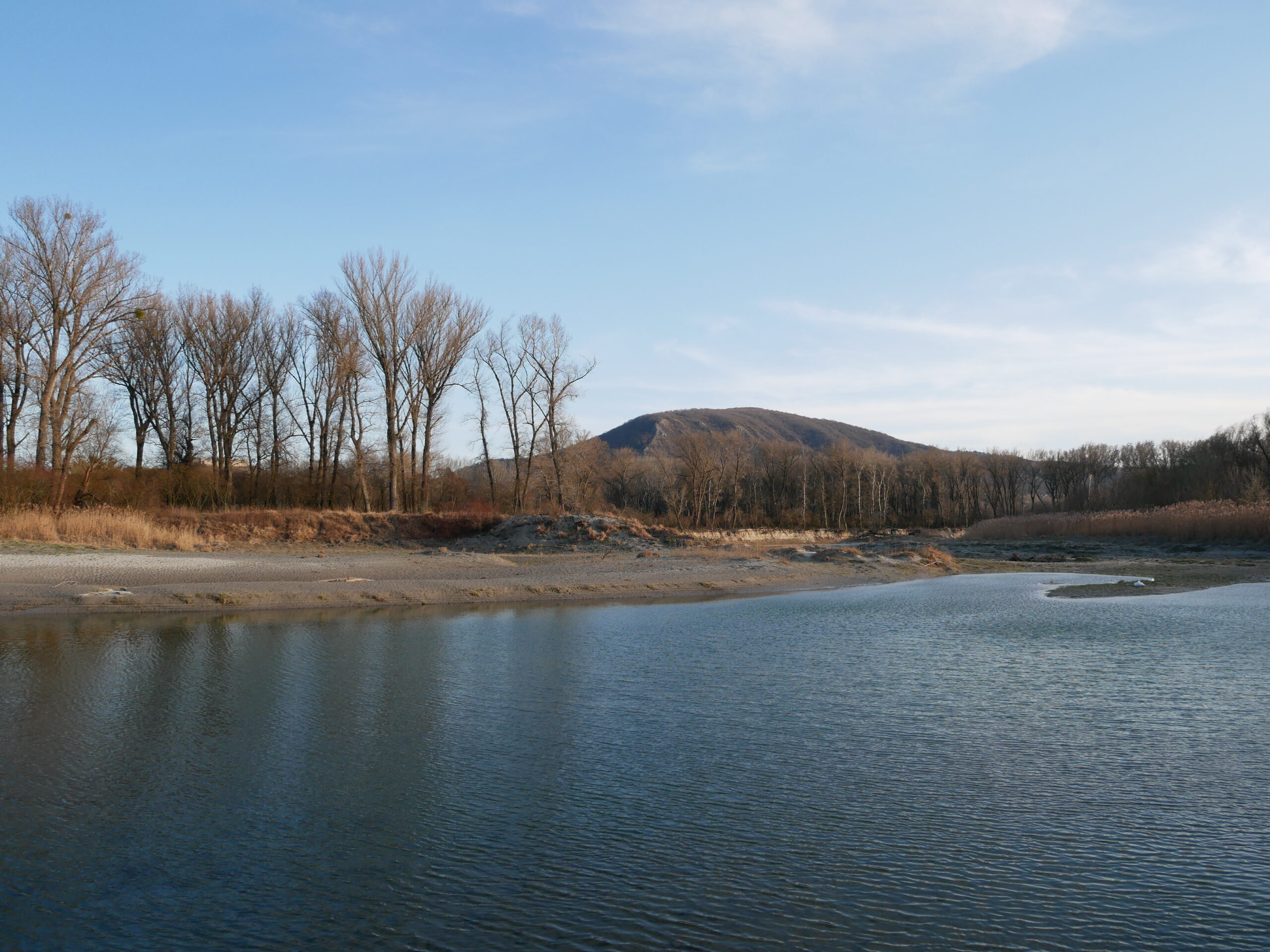
Newly sculpted fluvial landscapes emerge near the Slovakian border, after side-arms were reconnected with the main river.
The creative process will be shared with a collaborative team of human artists with whom I enjoy a long-standing working relationship: with soprano Juliet Fraser, performers Elie Halonen and Satu Hakamäki, and scenographer Lisa Horvath. The orchestra will be the RSO Radio Symphony Orchestra Vienna, conducted by Irene Delgado-Jiménez – another important collaborator for the realisation of this piece in the Wiener Konzerthaus on October 30th, 2026.
In the context of the practice of co-creation with a river – Rosi Braidotti’s small booklet Posthuman Knowledge & the Critical Post-Humanities (2019, Harvard Design Press and Sternberg Press) is a source of inspiration. She writes that, in our effort to find alternatives, “ ‘we’ need a new collective subject, a ‘we’-are-in-this-together kind of subject” – but we are not one and the same. Nor are we in binary opposition. This is precisely how I understand my collaboration with the Danube. We are different and we are in this process together. How can we – together – develop a set of attributes and musical terminologies, of meaningful sounds, noises, words? And how can we avoid the polarising between mourning and celebrating the current state of the world, and instead become open to a more diverse range of emotions?
March 2026
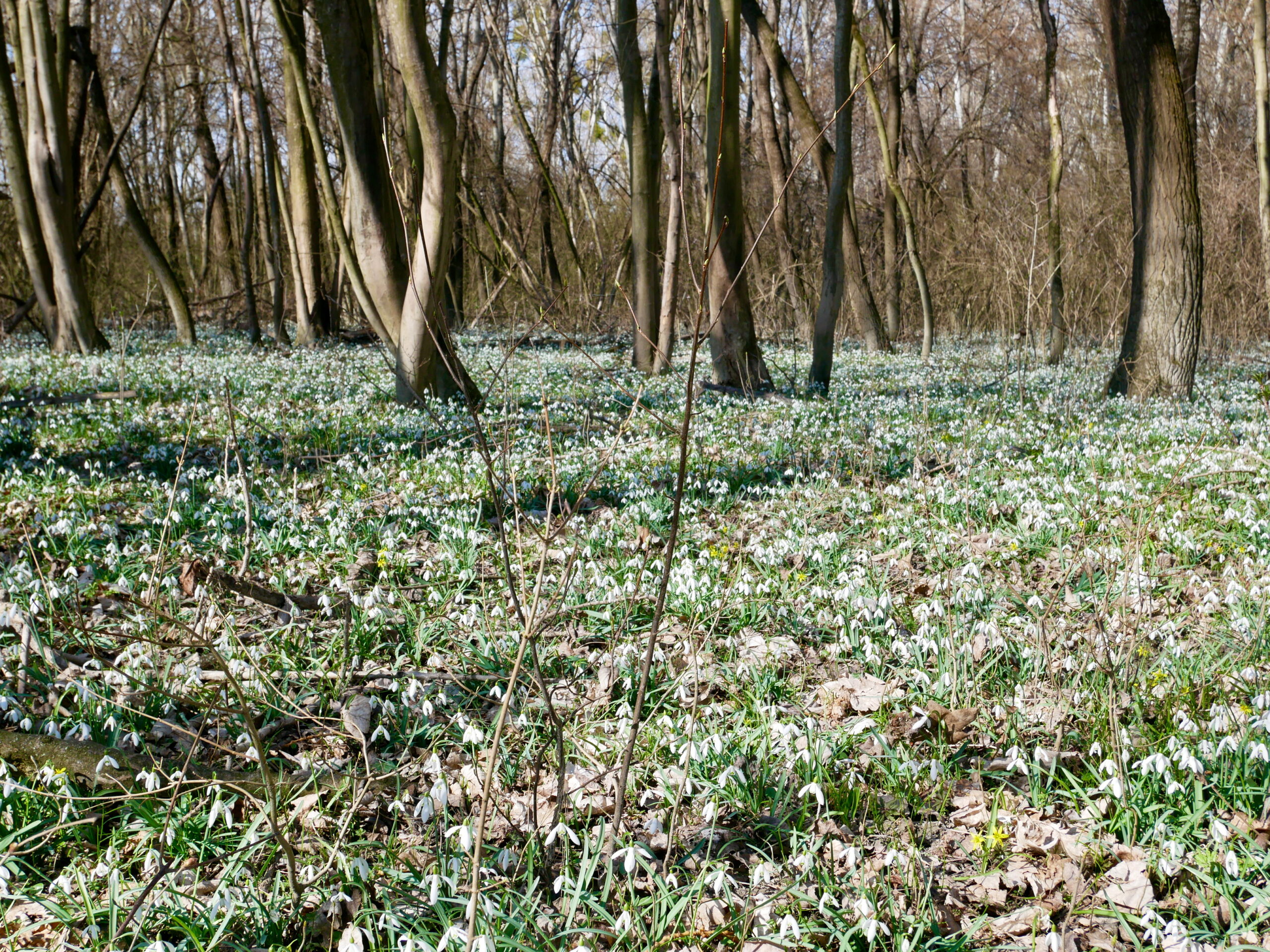
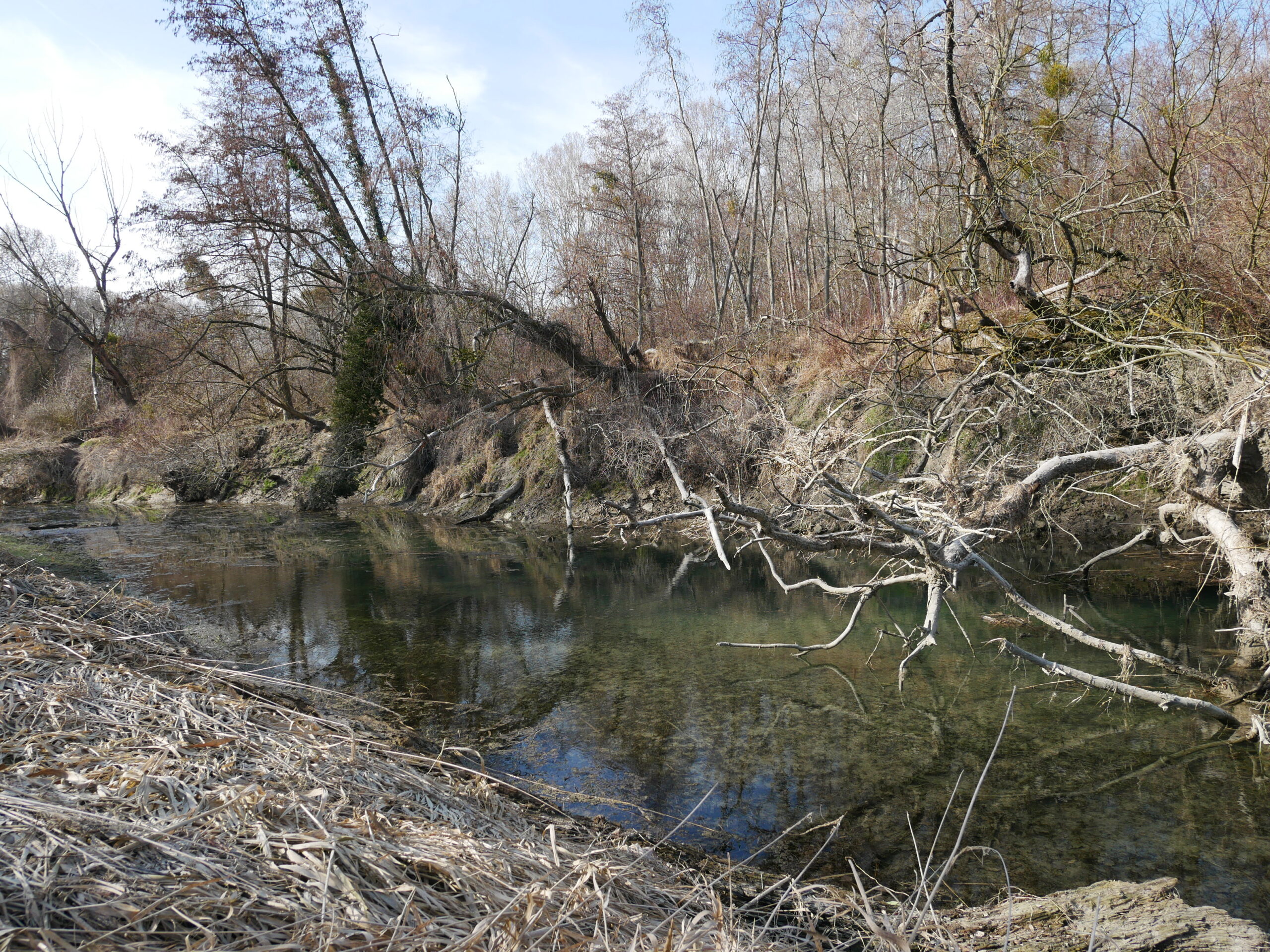
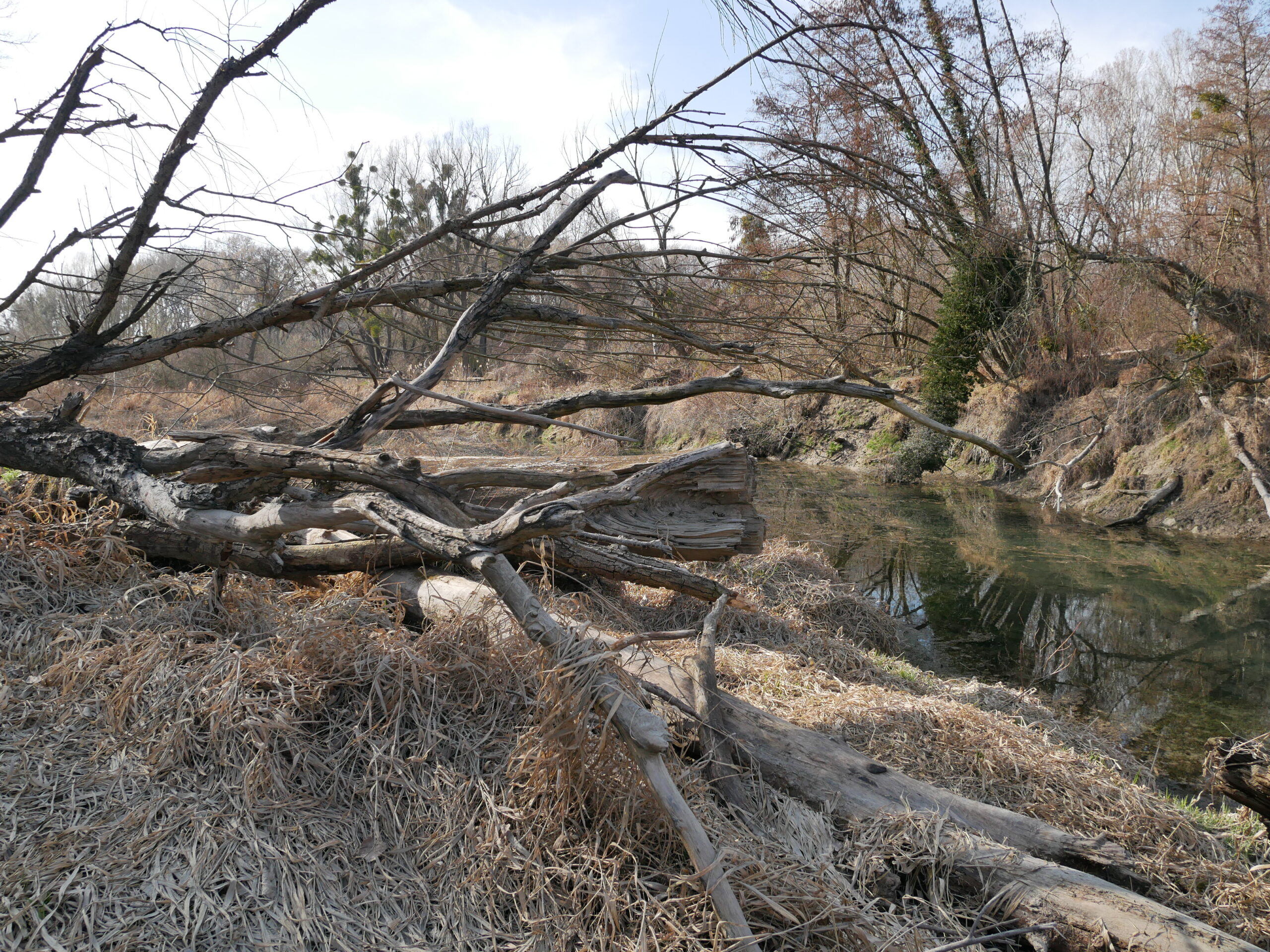
A hint of spring is in the air, after some sunny days. The water level has gone down again, after the brief rise following the period of snowfall in February. I took these photos during two extended excursions into the Danube National Park in early March, as I was guided by the park rangers Alena Täubling and Manfred Rosenberger respectively, who shared their incredible knowledge about the landscape, its history, and their personal relationships with the river with me.
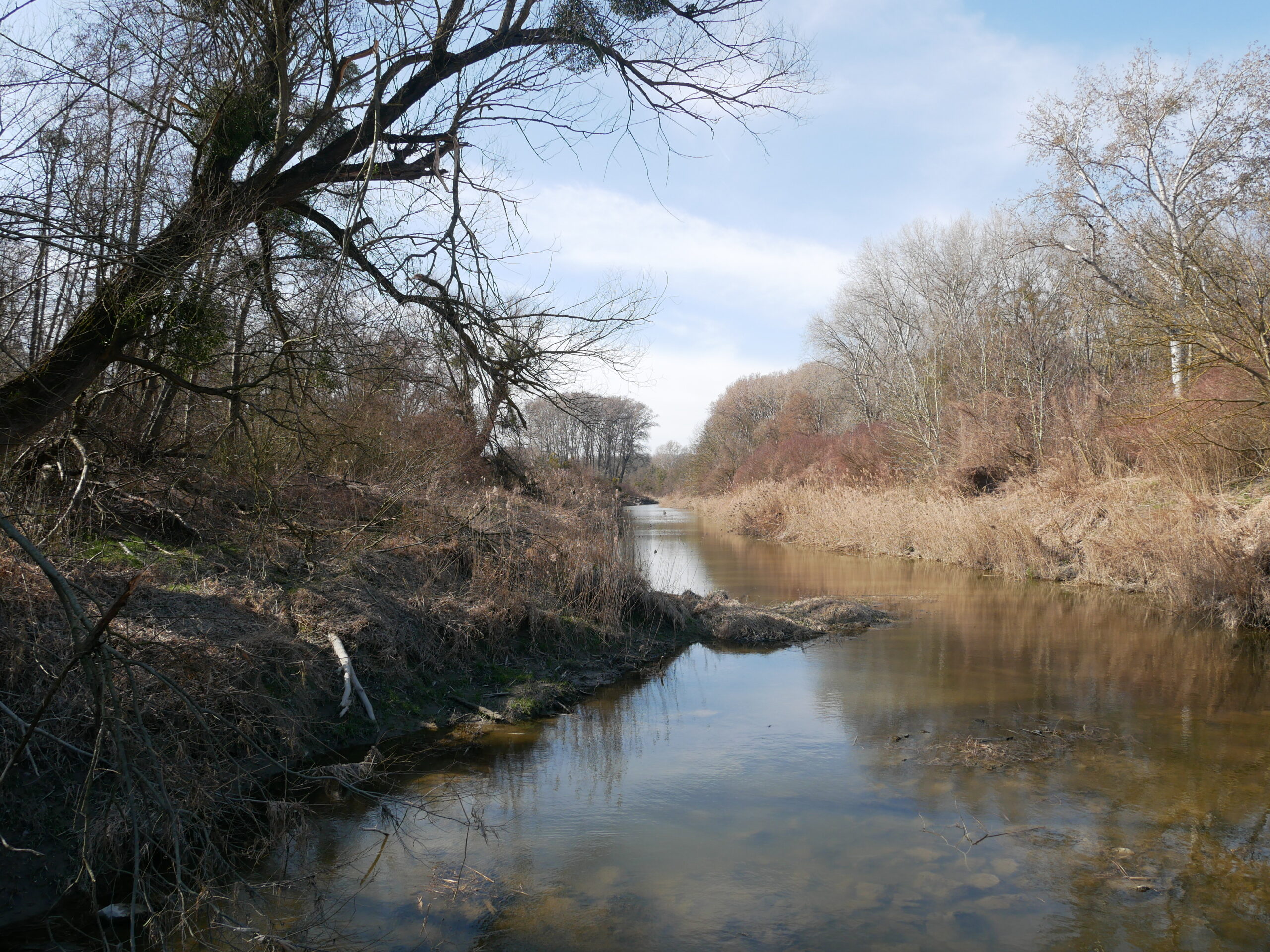
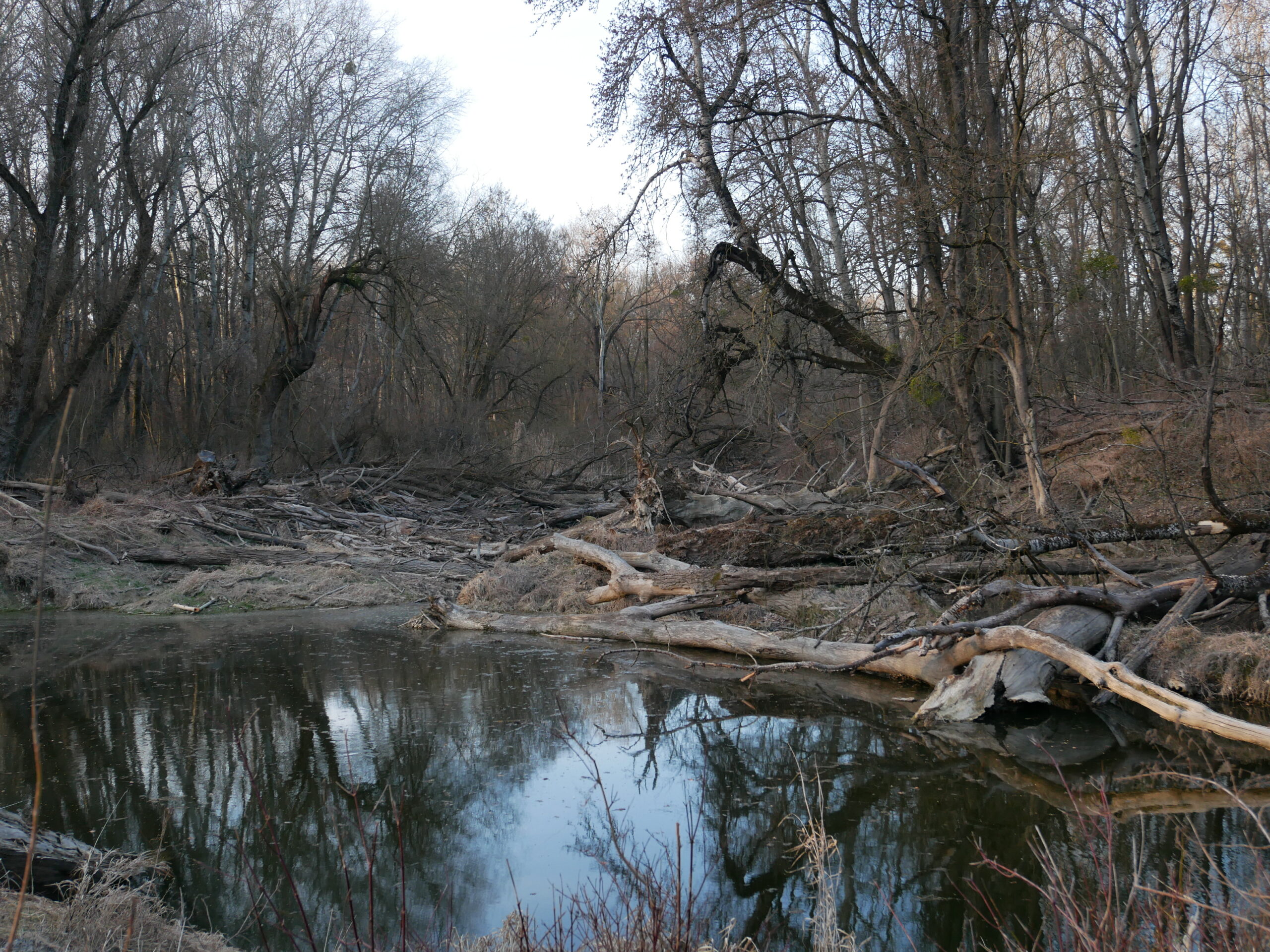
View of a side arm of the river near Orth an der Donau
An important part of the ancient history of the landscape is the Roman occupation and colonisation of the area around Vienna. Just recently, new parts of an extended Roman fort near the river were explored and mapped, deep in the forest.
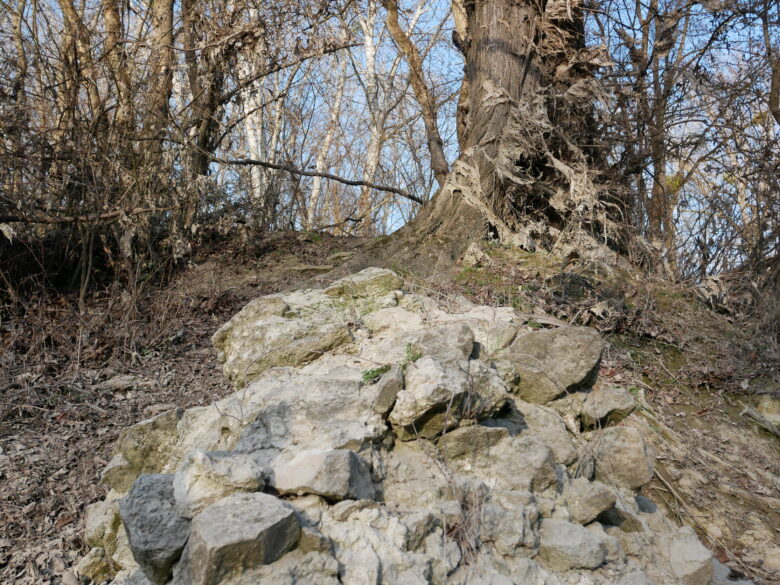
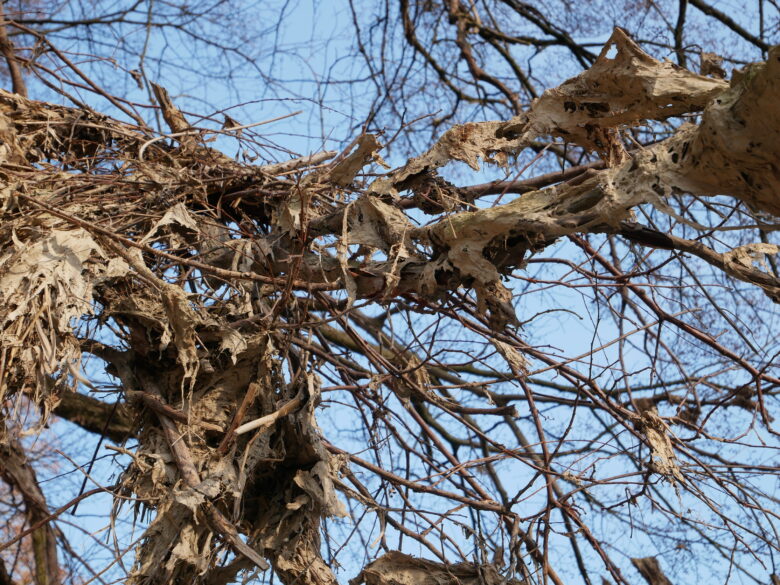
Remnants of a Roman wall made from stone and cement, underneath a tree hung with biological debris from the last flood.
Another – more recent – critical time was the legendary “Besetzung der Hainburger Au” (occupation of the river wetland Hainburger Au ) in 1984, to ward off the plan to build a hydroelectric power plant in this area, just downstream from Vienna. An outcry by environmental and nature protection groups caused nationwide protest that were supported by a growing number of Austrian citizens. Protest increased while site-clearing had already begun in the forest. The protest movement was successful; the Austrian Supreme Court halted the construction work.
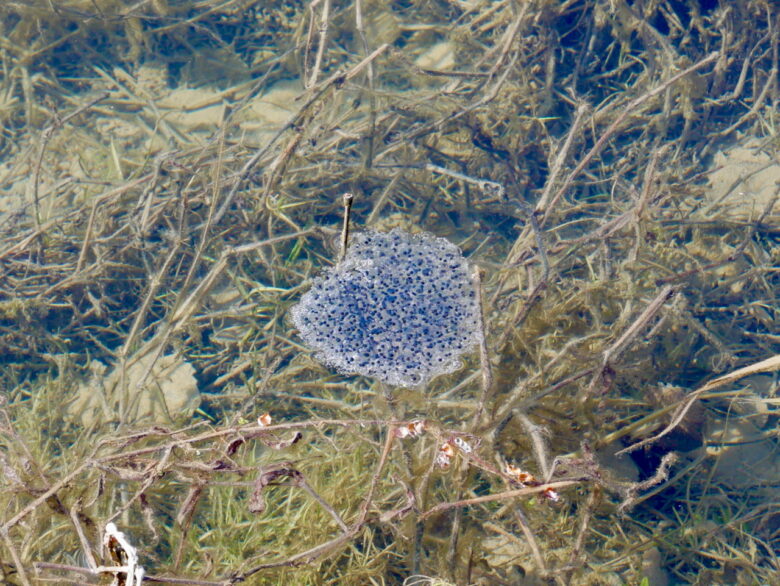
During the political discussions and negotiations that followed, the plans to build a dam and power plant were eliminated. After a national referendum calling for the preservation of the landscape, the Donau-Auen National Park was established in 1996 (see under https://www.donauauen.at/en/facts/history/the-path-to-becoming-a-national-park).
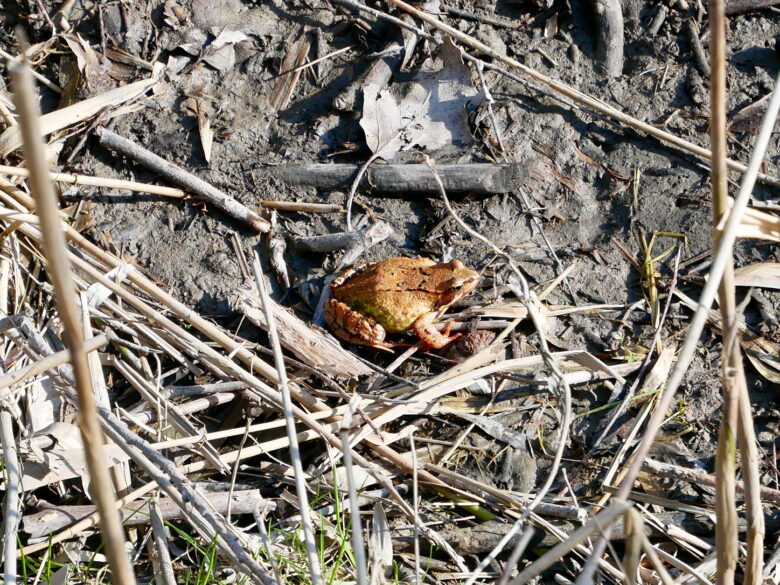
Learning from the river with these experienced guides was an important and intense experience that again influences my artistic work. When I’m back on my desk to compose and write, the river is present, I’m not alone.
February 2026
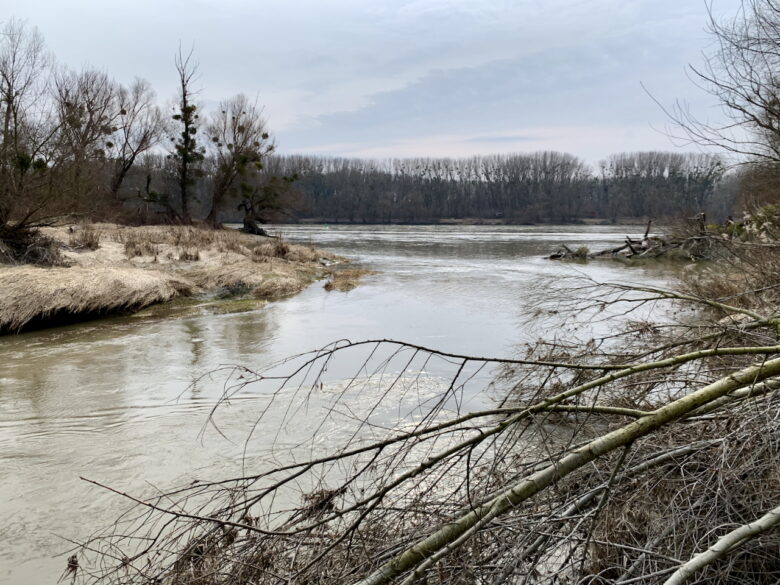
Recent snowfall brings more meltwater into the river
February was a cold, dark and foggy month that also brought a surprising amount of snow to Vienna, quite unexpectedly. Only now, at the very last days, sunshine breaks through the clouds and it gets warmer rapidly. Too warm actually. What a contrast.
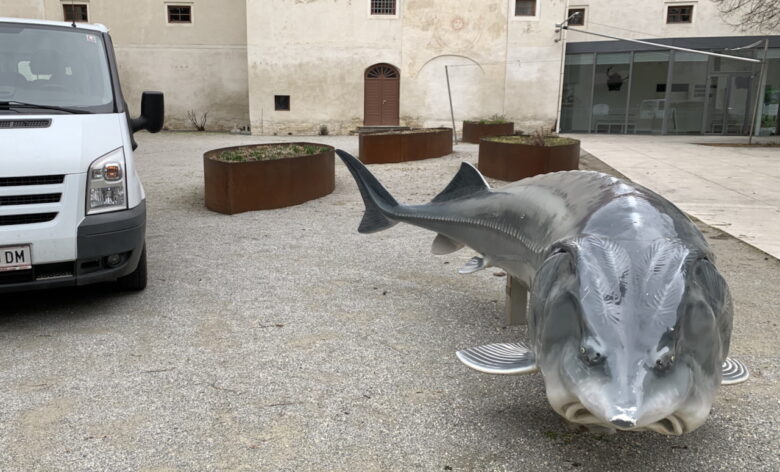
Life-size replica of a Danube sturgeon at the Park Centre in Orth an der Donau
About 30 kilometres downstream from Vienna, I visited the small town of Orth an der Donau and its historic castle, which houses the National Park’s visitor centre — still closed for the winter. An imposing replica of the now-extinct Danube sturgeon stands in the courtyard. Less than 150 years ago, these great fish moved through the river in astonishing abundance. They have done so for thousands of years. Then we intervened. We dammed the waters to harness electricity, and the sturgeon disappeared. What have we done? I imagine the river remembers. I imagine the Danube grieving the loss of their silvery giants. What kind of lament do you sing, Danube, for the many beings that we have destroyed?
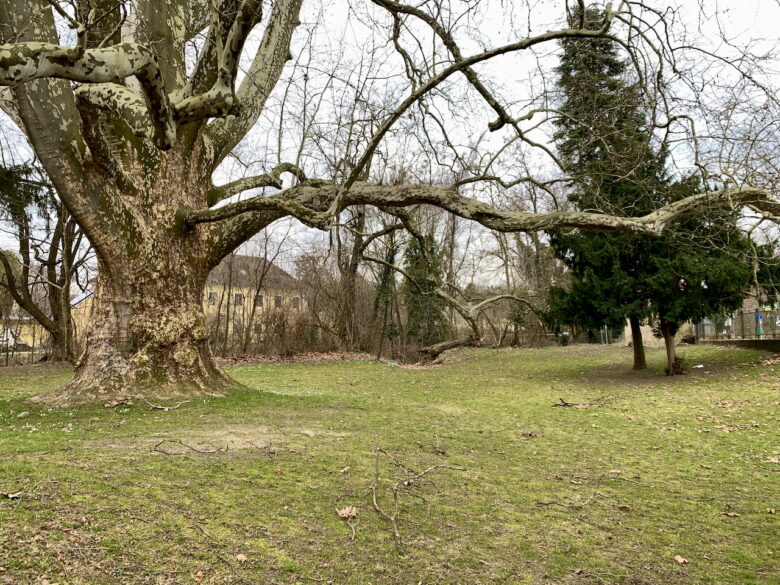
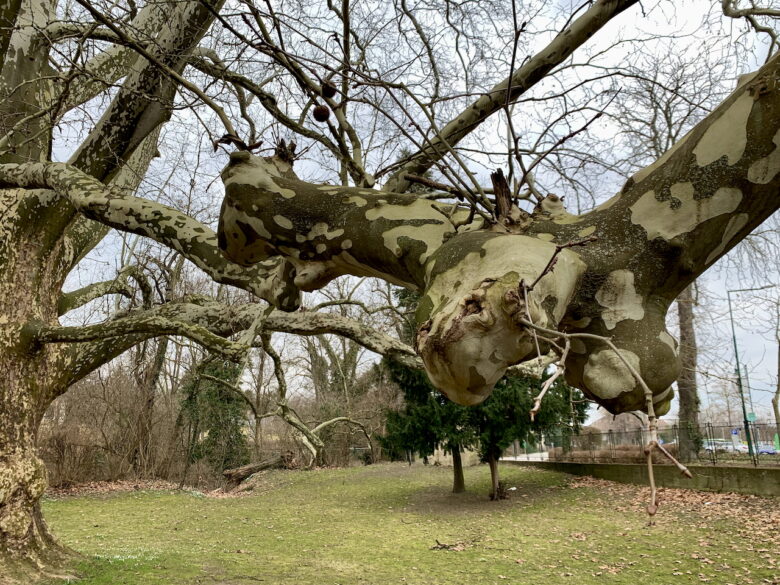
In the park surrounding the castle, a magnificent old plane tree rises above a girdle of snowdrops (Galanthus nivalis). Their long, knotty branches seem to stretch endlessly across the moss-covered lawn.
The shores of the Danube lie close by. A short walk brings me to the Orther Islands, a small cluster of reed-fringed islets with scattered trees along the river’s left bank. In summer, when the water level allows, people come here to enjoy the sun or shade and swim, drawn to the relaxing intimacy of the landscape.
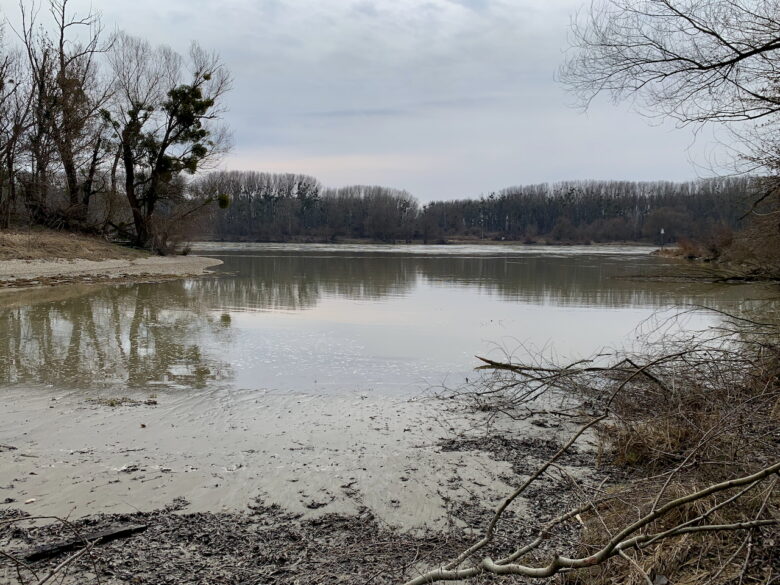
The river always surprises me. It is different every time I visit. The water level is rather high this time, the Danube swiftly licks around the lower meadows. The forest floor is covered with snowdrops and wild garlic. We forage a handful of garlic leaves, the first of the season. Thank you, wetlands!

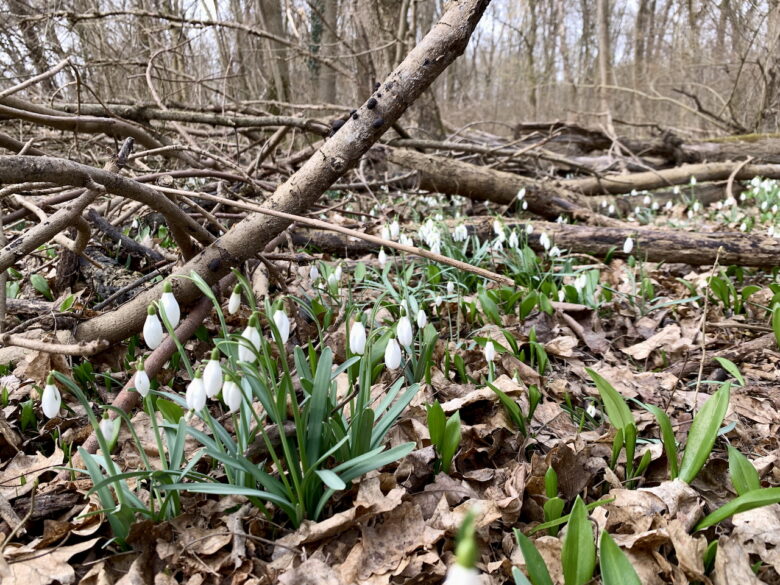
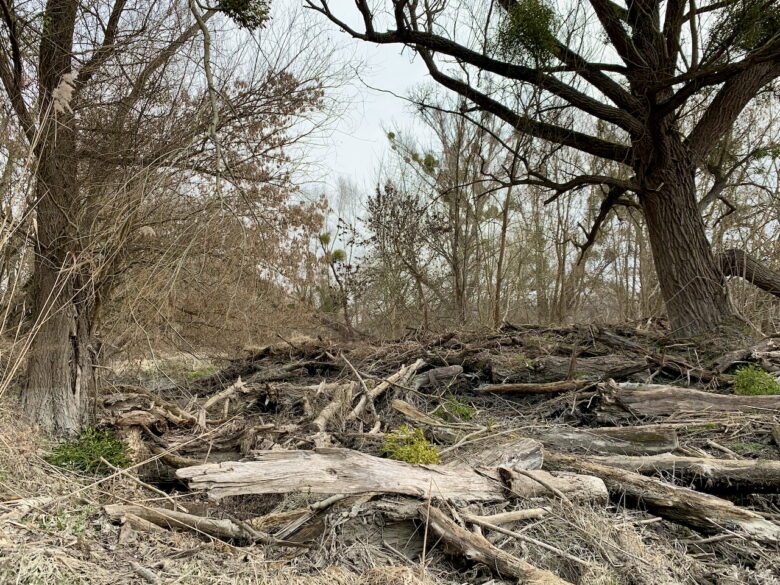
In the unusually warm weather, birds sing in the forest, accompanied by the occasional drumming of woodpeckers – and the distant noises of airplanes landing and departing from the airport across the river, upstream toward Vienna.

January 2026
This year, I will dedicate my time to explore how to co-create a piece of music with a river – with the Danube River.
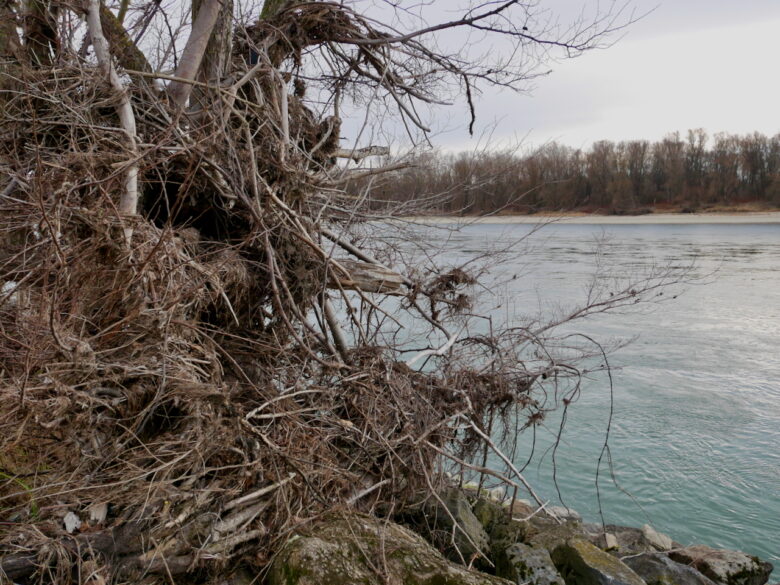
I want to nourish and deepen a relationship with the charismatic river that runs through Vienna, the city where I live. I have known the Danube River since my childhood. The plan for this year is to create a larger composition for soprano, orchestra, two performers and electronics WITH THE DANUBE – that’s also the title of the piece. The music, text, scenography and performance are co-composed through an interactive and collaborative process that invites the river as a living being and co-creator. The project is designed to cultivate multispecies thinking and a co-creative relationship – or rather, partnership with a fluvial ecosystem. Such a relationship is not something I can decide for myself. The river must be asked, invited, and cared for.
How to care for a river?
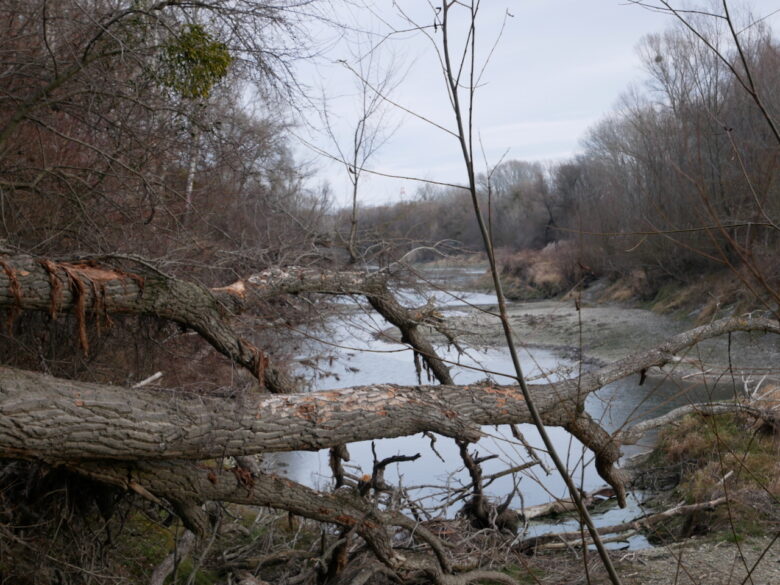
In winter, beavers feast on the bark of newly felled trees
I’m delighted to announce that I have received a state scholarship in composition from the Republic of Austria for this work. This will enable me (us) to further deepen and expand the explorations. However, I am not the (only) composer or artist at work. I’m a partner, a co-composer working in collaboration with the Danube River as a living being and active partner.
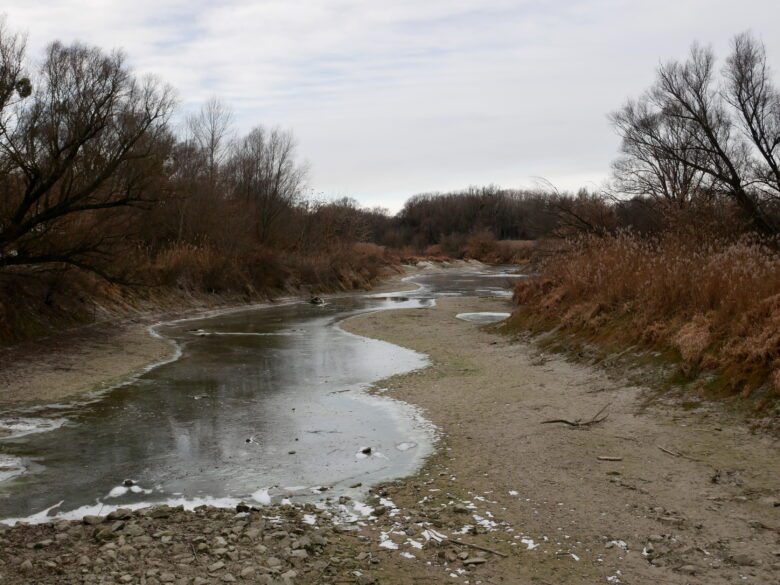
The Danube River is a dynamic ecosystem and a living fluvial landscape. I approach it as a great powerful entity, a plurality with which I can interact as a human being. I communicate with the river, and vice versa the river communicates with me. This is a bodily form of communication. I am learning how to listen to/into the river.
What does the river want?
I belong to the Danube landscape. The city of Vienna and its people have been shaped by the river since its very beginning. It was the rich fluvial landscape that has attracted human beings to settle down at their shores, a long time ago.
The piece will not be “about” the river or “inspired by” the river, nor will it be composed or performed “on the shore of the beautiful blue Danube” (“An der schönen blauen Donau”).
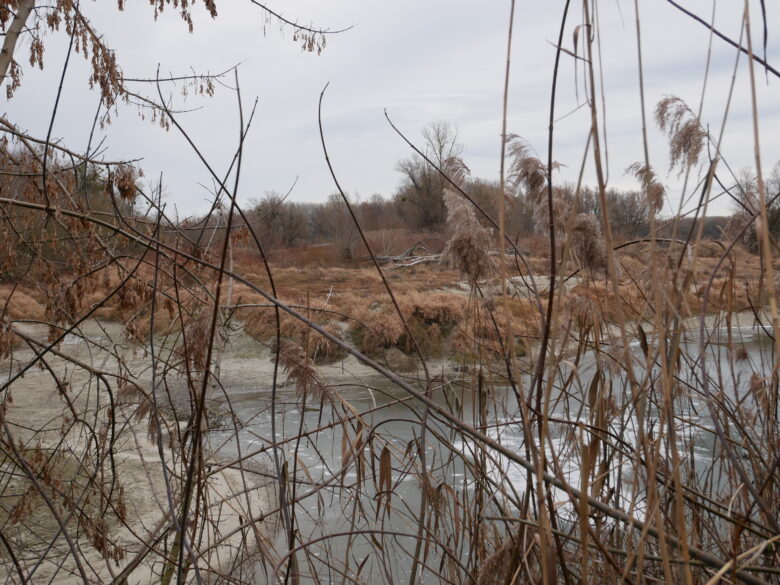
Work and research have already begun in the spring of 2025. Over the last months, I have spent many days in the Donau-Auen National Park, a protected river landscape stretching from Vienna to Bratislava. The environments and forests along the river constantly change. These fotos are from an exploration in early January 2026, when I hiked towards the river from the small village Schönau an der Donau. In this region, the current month was very dry with rather low temperatures. The river has shrunk, the water level is extremely low.
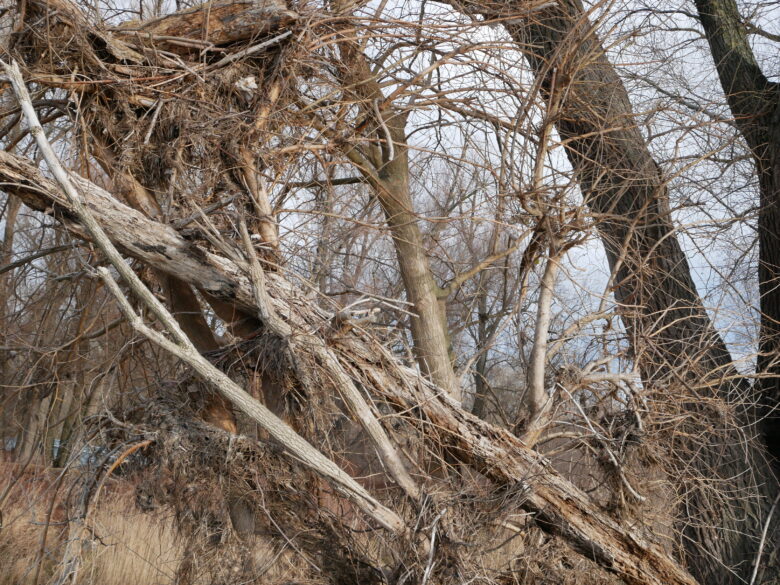
The kinetic sculptures created by the big flood of September 2024 are still visible
I have visited the same spots, places and shores many times. By now, the landscape has become familiar – yet, every time it appears to be different. It looks and feels different. The Danube River is in a different state and mood. So am I, and our relationship is constantly changing, too. I have to get used to that.
All fotos by Pia Palme 2026
Donau-Auen National Park